Best Mask for Delhi Air Pollution (2026 Guide)
Every winter, millions of Delhi residents wake up to a thick blanket of smog covering the city. The Air Quality Index (AQI) regularly crosses 400—a level considered "severe" and dangerous for everyone, not just those with existing health conditions. If you're a daily commuter, parent, or office worker in Delhi-NCR, you've probably wondered: what's the best mask for Delhi air pollution?
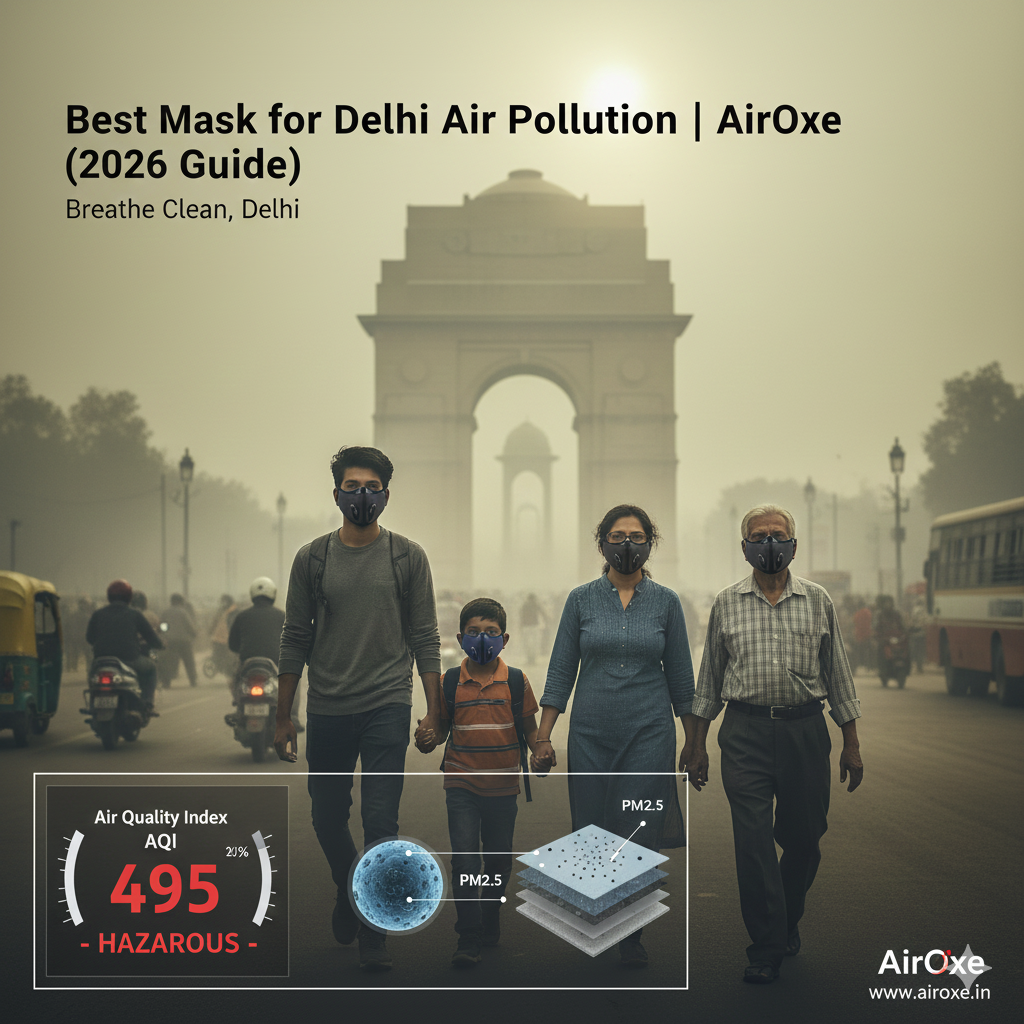
The truth is, not all masks work. Cheap cloth masks, surgical masks, and basic face coverings offer little to no protection against PM2.5 particles—the tiny pollutants that penetrate deep into your lungs. This guide will help you understand what makes a good pollution mask, why reusable options are gaining popularity, and how to choose one that actually protects your health.
Why Normal Masks Don't Work Against Delhi Pollution
Many people reach for surgical masks or simple cloth masks when the AQI spikes. Unfortunately, these offer minimal protection because they lack proper filtration and fit.
Key Problem: PM2.5 particles (particulate matter smaller than 2.5 micrometers) are invisible to the naked eye and can bypass loose-fitting masks. These particles cause respiratory issues, heart problems, and long-term health damage.
Common issues with basic masks include:
- •Poor filtration: Cloth and surgical masks filter only large dust particles, not fine PM2.5 or PM10.
- •Loose fit: Air leaks in from the sides, making the mask ineffective.
- •Discomfort: Cheap masks fog up glasses, cause skin irritation, and become stuffy quickly.
- •Single-use waste: Disposable masks create tons of plastic waste and need constant replacement.
What to Look for in a Delhi Pollution Mask
When shopping for an air pollution mask in India, focus on three critical factors:
1. Filtration Efficiency
Look for masks with multi-layer filters that can capture PM2.5 and PM10 particles. While N95 masks are popular, many modern reusable masks now offer comparable or even better filtration through activated carbon and HEPA-like layers.
2. Proper Fit & Seal
A mask must fit snugly around your nose and chin without gaps. Adjustable ear loops and nose clips help achieve this. If air leaks from the sides, the mask isn't doing its job—no matter how good the filter is.
3. Breathability & Comfort
You're more likely to wear a mask consistently if it's comfortable. Look for features like breathable fabric, anti-fog design (important if you wear glasses), and skin-friendly materials.
Disposable vs Reusable Pollution Masks: Which Is Better?
| Feature | Disposable N95 | Reusable Pollution Mask |
|---|---|---|
| Cost | ₹20-50 per mask | ₹500-1500 (lasts months) |
| Lifespan | Single use (8-12 hours) | Washable, lasts 3-6 months |
| Comfort | Can be stuffy, tight elastic | Soft fabric, adjustable fit |
| Environmental Impact | High plastic waste | Low waste, eco-friendly |
| Style Options | Medical look only | Multiple colors & designs |
| Best For | Occasional use, emergencies | Daily commuters, long-term use |
For most Delhi residents, a reusable pollution mask makes more sense—both financially and environmentally. Brands like AirOxe are now offering premium reusable masks designed specifically for Indian cities, with multi-layer filtration, comfortable fits, and modern designs that don't look clinical.
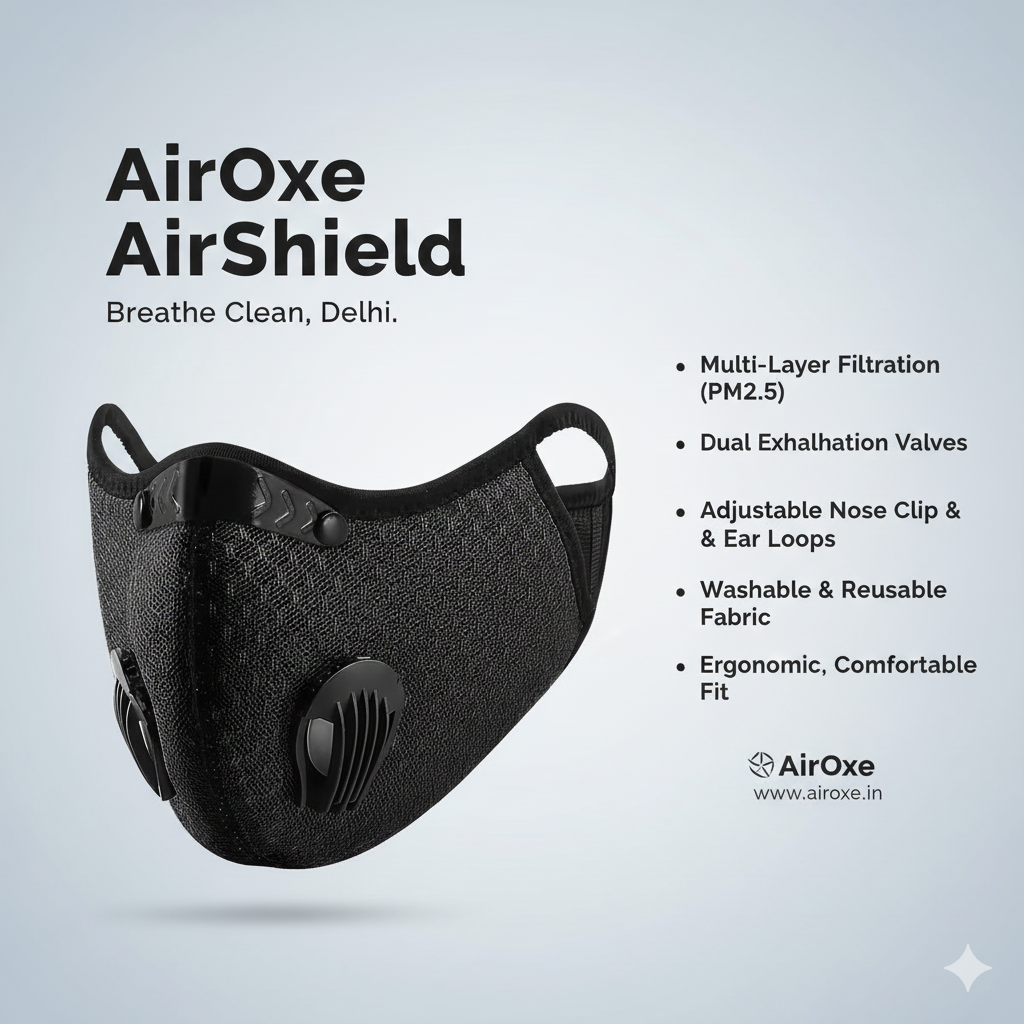
Looking for a Reliable Delhi Pollution Mask?
AirOxe AirShield is designed for Indian pollution levels with multi-layer filtration, comfortable fit, and reusable design.
View AirOxe AirShieldWho Should Wear Pollution Masks Daily?
While everyone benefits from wearing a mask during high-pollution days, some groups are at higher risk:
- •Two-wheeler riders: You're directly exposed to traffic fumes and dust.
- •Children & elderly: More vulnerable to respiratory issues.
- •People with asthma or lung conditions: Pollution worsens existing health problems.
- •Outdoor workers: Street vendors, delivery staff, and construction workers face daily exposure.
- •Morning walkers & fitness enthusiasts: Exercising outdoors during poor AQI can do more harm than good without protection.
Choosing the right pollution mask isn’t optional anymore in cities like Delhi. It’s a daily health decision — make it a smart one.
Frequently Asked Questions
Do N95 masks work for pollution?
Yes, N95 masks filter at least 95% of airborne particles, including PM2.5. However, they're designed for single use and can be uncomfortable for daily wear. Reusable alternatives with similar filtration are now widely available.
How often should I replace my pollution mask?
Disposable masks should be replaced after 8-12 hours of use. Reusable masks can last 3-6 months with regular washing, depending on the brand and filter quality.
Can children wear pollution masks?
Yes, but choose masks specifically designed for children with smaller fits. Adult masks won't seal properly on a child's face, making them ineffective.
Are pollution masks effective against vehicle exhaust?
Yes, masks with activated carbon layers can help filter out harmful gases from vehicle exhaust, in addition to particulate matter. Look for multi-layer filtration systems.
What AQI level requires wearing a mask?
Health experts recommend wearing masks when AQI crosses 150 (Unhealthy category). In Delhi, this often happens from October to February. Anyone sensitive to pollution should wear masks even at AQI 100+.
Final Thoughts
Delhi's air pollution isn't going away anytime soon. While we wait for policy changes and cleaner air, the best we can do is protect ourselves and our families. Investing in a good-quality delhi pollution mask isn't just about comfort—it's about safeguarding your long-term health.
Whether you choose disposable N95 masks for occasional use or opt for a premium reusable solution like AirOxe's multi-layer masks, the key is consistency. Wearing a mask during high-pollution days should become as routine as wearing a helmet on a bike.
Choosing the right pollution mask is no longer optional in cities like Delhi—it's a daily health decision.
Disclaimer:
This article is for informational purposes only. AirOxe masks are designed for lifestyle and pollution protection, not medical use. Consult a healthcare professional for medical-grade respiratory protection.